Top Neuroscience Coaches in the USA Transforming Executive Performance
In 2026, AI handles speed. Humans handle judgment. Learn how neuroscience coaching builds the decision clarity, psychological safety, and sustainable performance your leadership team needs.
In 2026, most US leadership conversations start with AI—speed, productivity, automation. But they don't end there.
Wharton Executive Education makes the point sharply: AI can generate outputs at extraordinary speed, but it can't determine relevance, weigh competing priorities, or sense when context demands judgment rather than optimization. Those choices still belong to humans—operating under uncertainty, pressure, and constant information flow.
That's the real executive performance constraint in the USA right now: human judgment under pressure.
And it's why searches for "top neuroscience coaches in USA" and "neuroscience executive coach USA" are rising. Neuroscience isn't being adopted because it's fascinating. It's being adopted because it works—when applied by coaches who understand how the brain and nervous system behave under pressure, and how to translate that understanding into better decisions, stronger teams, and sustainable high performance. Approaches like brain-based leadership for executives are becoming essential tools for organizations navigating this shift.
Why neuroscience coaching matters now
Three forces are reshaping executive performance in 2026:
1) AI is speeding up decisions—and amplifying consequences
When decision cycles compress, the cost of cognitive bias, threat-driven behavior, and misalignment rises. Leaders don't just need strategy. They need the capacity to stay clear under pressure—to distinguish signal from noise, and judgment from optimization.
2) Transformation fatigue is a capacity problem, not a motivation problem
Many organizations aren't failing because people don't care. They're failing because the human system is overloaded—leading to rework, slow adoption, and friction. Neuroscience coaching addresses the nervous system directly, building the resilience and clarity needed for sustained change.
3) Psychological safety at work has moved from "culture" to "execution"
If teams don't speak early, risks surface late. If they don't challenge, poor decisions harden. If they don't admit mistakes, learning speed collapses. Psychological safety is now a core operating condition for execution—and neuroscience coaching builds it systematically.
"I came to my session with Hanna looking for more structure, balance, and a sense that I'm on the right path as an entrepreneur. Through her grounded and at the same time emotionally supportive approach, I experienced a shift — from tension to lightness, along with a deeper sense of presence and physical relaxation. She also shared several clear and practical suggestions that I can immediately apply in my business. Hanna is a warm, encouraging, and highly experienced professional. With her support, it feels much more certain and easier to move forward."
Kristina Samra
Speaking Mentor & Speech Designer

What top neuroscience coaches actually do
At its best, neuroscience coaching is not about naming brain parts or quoting studies in a session. It's about understanding how the brain and nervous system behave under pressure—then using that understanding to build:
- • Better decisions under complexity and uncertainty
- • Less organizational friction and faster alignment
- • Healthier conflict and truth-telling at all levels
- • Stronger execution without burnout cycles
- • Sustainable high performance across the organization
The standard to hold: practical translation, not trivia. A great neuroscience coach moves leaders from reactivity to strategic presence, from confusion to clarity, from control to trust with accountability.
How to evaluate a top neuroscience coach
Before you choose, use criteria. Otherwise you're selecting based on charisma, branding, or LinkedIn visibility. Here's what to look for:
Evidence integrity
Can they separate science from storytelling? A credible coach uses neuroscience to sharpen clarity—not to impress. They use precise language ("supports," "is associated with," "may contribute"), avoid "brain hacks" and miracle claims, and can explain limitations and context.
Translation ability
Do they turn insight into behavior change? The best neuroscience coach isn't the one who knows the most papers. It's the one who can move leaders from reactivity to strategic presence, confusion to clarity, control to trust with accountability, and friction to aligned execution.
Systems lens
Do they work beyond the individual? Executive outcomes rarely come from individual change alone. You need team dynamics, decision forums, communication rhythms, and aligned operating cadence. If the coach only works "inside the leader," you'll get personal growth but limited organizational movement.
Fit for your context
A great coach in one environment can fail in another. Choose for transformation intensity, governance complexity, multicultural realities, and stakeholder pressure. Ask for case studies, client references, and measurable outcomes—not just credentials.

What Hanna Curman brings to executive transformation
Hanna Curman works with C-suite leaders and organizations to navigate the paradigm shift that neuroscience coaching enables. Her approach combines:
- • 1:1 Executive Coaching: Deep work with individual leaders to build decision clarity, emotional resilience, and strategic presence under pressure.
- • Management Team Transformation: Systems-level work with leadership teams to build psychological safety, aligned decision-making, and execution capability.
- • Speaking & Workshops: Bringing neuroscience insights to your organization through keynotes, workshops, and training programs.
- • Consulting & Strategy: Advising on organizational design, culture, and capability-building for sustainable transformation.
The goal is always the same: move your organization from reactive, fragmented, and fatigued to clear, aligned, and sustainably high-performing.
"I arrived at my coaching session feeling completely blank and overwhelmed. But with just one question Hanna helped me pinpoint what mattered the most and find a major breakthrough. I went from feeling stuck to feeling genuinely excited to go out and tackle the problem with fresh perspective and energy."
Virginija Kerneviciute
Manager Global Information eXchange (GIX) | FedEx
How to choose a neuroscience executive coach USA buyers will trust
If you're an HR Director, Chief People Officer, or executive sponsor, the fastest way to separate signal from noise is to choose based on outcomes and method. Here's an executive scorecard tailored to the US market:
1) Do they work on cognition and coordination?
Performance breakdowns are rarely just "focus." They're also coordination failures: poor synchrony, trust decay, and slow truth. Wharton's point about synchrony being measurable and shaped by small behaviors is a useful benchmark. A strong coach addresses both individual clarity and team alignment.
2) Can they translate neuroscience into observable behaviors?
Ask for examples of behavior change in:
- Decision-making under pressure
- Communication under conflict
- Psychological safety at work (speaking up, dissent, early risk surfacing)
- Leadership team alignment habits
If they can't point to specific, measurable shifts in how leaders and teams actually behave, the coaching is likely staying at the insight level rather than driving real change.
3) Do they address the "meeting reality"?
Wharton's framing—people must make better decisions faster under intensifying cognitive and social demands—should show up in the coach's approach. If their method doesn't touch the real operating forums (exec meetings, transformation steering, critical conversations), impact will be fragile. The best coaches work directly in the spaces where decisions actually happen.
4) Do they avoid overclaims?
High-quality neuroscience practice uses careful language and avoids "rewire your brain in days" promises unless tied to specific, measurable protocols (as in neurofeedback-style programs). Be wary of coaches who promise transformation without acknowledging the time and effort required for sustainable change.
5) Can they scale?
For organizations, the highest leverage often starts with shared language at scale (a keynote or leadership forum intervention), then moves into deeper capability building. The best coaches can work at multiple levels—from individual coaching to team transformation to organization-wide culture shifts.
A global option for US organizations with cross-Atlantic operations
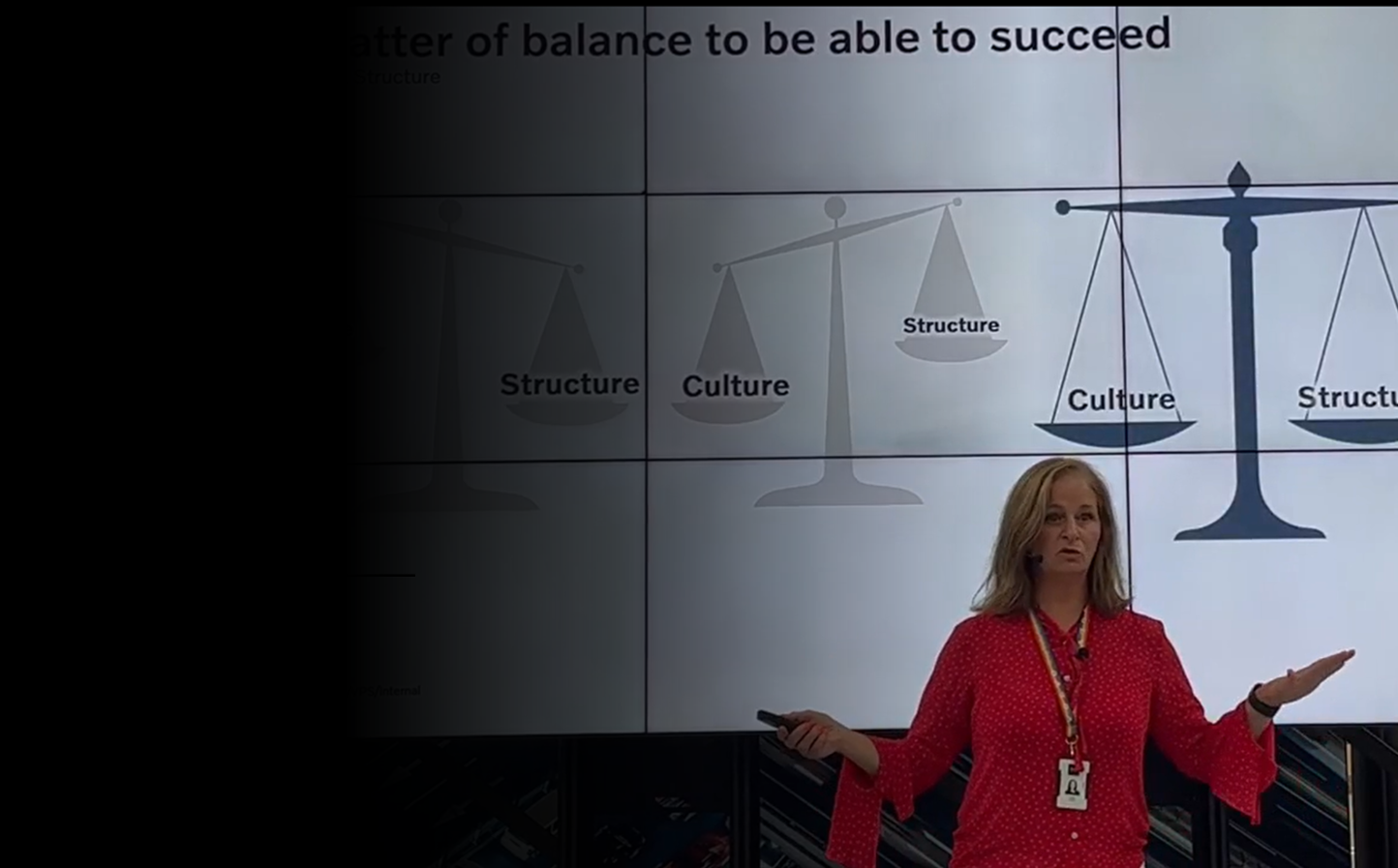
Many US organizations are increasingly global by default—distributed leadership teams, multicultural communication norms, and transformations that span regions. If you want a partner who works globally at that intersection, Hanna Curman brings a complementary perspective, especially when the goal is to reduce organizational friction and strengthen decision quality under pressure.
Her approach follows a clear logic: state → decisions → behaviors → culture/structure → results. This is often delivered through:
- • Executive advisory work tailored to your organization's specific challenges
- • Keynote speaking that creates shared language across senior leaders (fastest "entry point" to shift behaviors at scale)
For comparison, organizations with UK operations may also explore top neuroscience coaches in UK to understand regional approaches and best practices.
This is where the phrase "transformational advisor" becomes practical: not inspiration, but capability that holds when pressure rises.

"I met Hanna Curman through Janet Attwood's mindset and manifestation community and was immediately intrigued by her unique approach that blends neuroscience, leadership, and transformation. After reading about her work, I booked a session and was impressed from the very first conversation. The most powerful takeaway was a simple yet profound exercise that helped me slow my busy mind, engage all my senses, and reconnect with a heart-centered state. I've practiced grounding techniques before, but Hanna's approach created an immediate sense of calm, clarity, and focus. Even after just one session, I walked away with practical tools that I can use every day. Hanna has a remarkable ability to combine science, intuition, and real-world application in a way that creates meaningful results. I highly recommend her to anyone looking to improve focus, navigate pressure, and lead with greater clarity and confidence." Big hugs,
Jennie Milton
International entrepreneur, best-selling author, award-winning speaker
Next steps: Explore related resources
To deepen your understanding of how neuroscience coaching drives executive performance, explore these related topics:
- • Decision-Making Under Pressure: How state management shapes decision quality and execution
- • Psychological Safety at Work: Why truth flow is performance infrastructure, not just culture
- • Sustainable High Performance: Building presence as capacity, not intensity
- • Speaking & Keynotes: How to build shared language fast across your leadership team
The bottom line
The phrase "top neuroscience coaches in USA" is now a proxy for a deeper need: executives want a reliable way to protect decision quality, trust, and execution in a world where AI accelerates everything—except human capacity.
In 2026, the most credible neuroscience leadership approaches in America do three things:
- • Strengthen human judgment and social coordination (not just knowledge)
- • Translate into behaviors leaders can use in real time under pressure
- • Create measurable movement in execution—not generic wellbeing language
That's the bar. And it's also why this field is worth taking seriously. For a comprehensive guide on how to evaluate neuroscience coaches, explore our detailed evaluation framework and case studies.
Ready to transform your executive performance?
Whether you're a C-suite leader looking to sharpen your decision-making, an HR Director seeking to build leadership capability, or an organization ready for a paradigm shift, the next step is clear.
Explore Hanna's services and discover how neuroscience-based coaching can unlock the human judgment, psychological safety, and sustainable performance your organization needs.
Discover How Neuroscience Coaching Transforms Executive Performance
Explore our full range of services, from 1:1 coaching to organizational transformation.