A framework for leaders navigating transformation, complexity and high-stakes decisions.
Transformation rarely fails because organisations lack strategy.
It falters when leaders must make difficult decisions under pressure, build trust across competing priorities and create the conditions for people to move together.
The Framework helps leaders understand—and change—the human conditions that determine whether transformation succeeds.
Why Transformation Needs a Different Approach
Organisations rarely fail because they lack strategy. They struggle because strategy alone cannot create transformation. Sustainable organisational transformation depends on the human conditions that enable people to think, decide and act differently. This Framework helps leaders understand and shape those conditions.
Six Core Principles
Strategy Alone Isn't Enough
A brilliant strategy fails when people lack clarity, trust or the capacity to execute. This Framework and The Clarity Chain help leaders create the human conditions that allow strategy to become sustained action.
Pressure Changes How Leaders Think
Under stress, executives default to control. Cognitive capacity shrinks. Decision quality declines. This Framework helps leaders recognise and regulate their own state so they can make strategic rather than reactive decisions.
Resistance Is Predictable
Resistance is rarely the problem. It is usually a signal that one or more human conditions required for change are missing.
Alignment Doesn't Happen by Accident
Leadership teams naturally drift apart under pressure. Without deliberate conversations, shared language and decision rituals, mixed signals cascade throughout the organisation.
Momentum Must Be Designed
Early wins create psychological safety and motivation. When people see progress and feel connected to the purpose, momentum builds naturally. This Framework helps you create and sustain it.
Culture Follows Conditions
You can't mandate culture change. But you can create the conditions—clarity, trust, alignment, capacity, momentum—that allow culture to shift. The Clarity Chain helps leaders create those conditions deliberately and consistently.On individual level, team level and organizational level.
These six patterns reveal a deeper truth: sustainable transformation depends on five human conditions that leaders can intentionally create.
Why This Matters
Transformation succeeds when leaders understand the human conditions that shape behaviour, decisions and execution.
This Framework provides a practical approach for creating those conditions.
The Five Human Conditions for Sustainable Transformation
These conditions are interdependent. When all five are in place, execution accelerates. When one breaks, the entire system feels the impact.
Clarity
People understand why change is happening, what it means, and what's expected. Ambiguity decreases. Anxiety decreases. Execution increases.
Presence Under Pressure →Trust
Psychological safety is high. People feel safe to speak up, admit mistakes, and challenge ideas. Information flows. Collaboration deepens.
Psychological Safety →Alignment
Leadership teams operate from the same mental model. Decisions are consistent. Signals are clear. Friction decreases.
Leadership Under Pressure →Transformation Capacity
People have the cognitive and emotional bandwidth to absorb change. Workload is manageable. Recovery time is built in. Burnout is prevented.
The Vagus Nerve →Momentum
Early wins are visible. Progress is measurable. People see that change is working. Motivation increases. Adoption accelerates.
Leadership Under Pressure →Clarity without trust creates compliance, not commitment. Alignment without capacity creates burnout. When all five are in place, transformation becomes possible.
This Framework helps you diagnose which conditions are missing and design interventions to restore them.
What Is This Framework?
This is a practical framework for understanding and leading the human side of organisational transformation. It integrates executive decision-making, human dynamics, and organisational behaviour to help leaders navigate change with clarity, confidence, and resilience.
Rather than focusing only on strategy and execution, it helps leaders understand the conditions that determine whether transformation creates movement or resistance.
Research-Informed. Business-Focused.
This approach draws on human dynamics research to explain how leaders and teams respond to pressure and uncertainty. It incorporates organisational behaviour research, executive decision-making frameworks, and systems thinking to translate insight into practical business interventions.
Turning Human Dynamics into Strategic Action
This Framework translates human dynamics into operating reality. It gives you concrete tools to diagnose where clarity is missing, where trust is eroding, and where your organisation is losing momentum. It connects your business strategy to the human conditions that enable—or block—execution, showing you where strategy and human reality are misaligned.
Ready to explore how this Framework can strengthen your organisation?
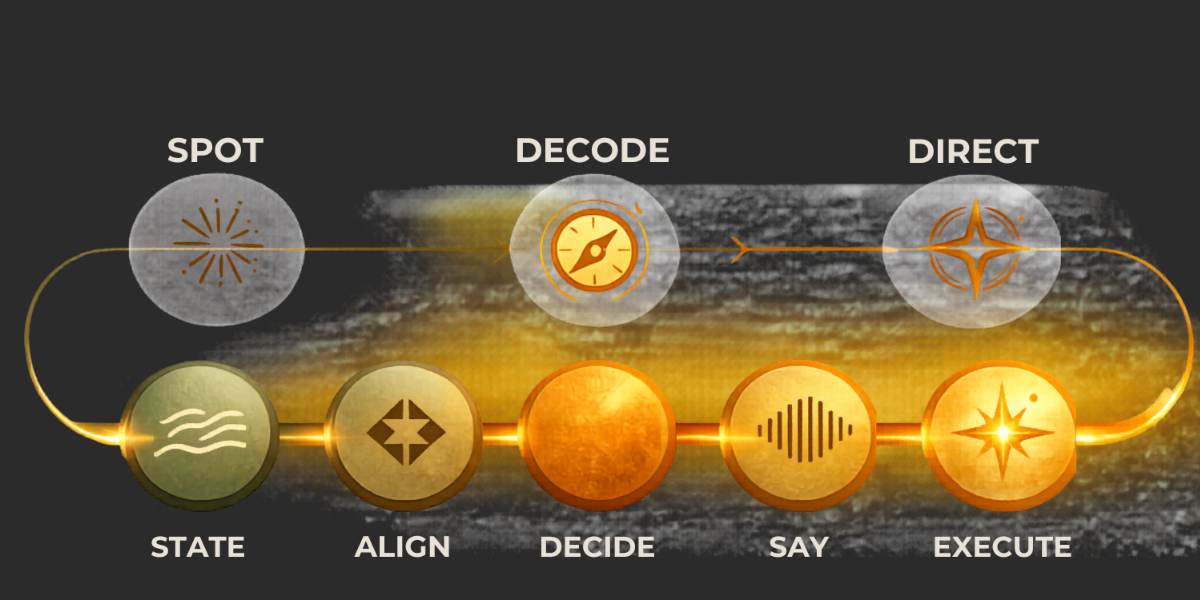
The Clarity Chain
The Clarity Chain is the practical methodology within this Framework.
While the Framework provides the foundation for understanding transformation, The Clarity Chain provides the structured process leaders use to create clarity, alignment and sustainable change.
When This Framework Creates the Greatest Value
This Framework is designed for leaders and organisations navigating complexity, change, or performance challenges. It's relevant when:
Major Transformation
You're preparing for a significant organisational shift—merger, restructure, strategy pivot, market disruption, or digital transformation. You need your leadership team aligned and resilient to navigate the human side of organisational transformation. Explore how human dynamics shape digital transformation.
Leadership Misalignment
Your executive team operates from different mental models. Decisions are slow. Mixed signals cascade through the organisation. Trust is eroding. You need to rebuild alignment and restore clarity.
Resistance to Change
You've launched initiatives, but adoption is slow. Resistance is high. People don't understand why change is happening or what's expected. You need to create clarity and psychological safety across the human side of organisational transformation. Discover why traditional change management often fails.
Loss of Momentum
You started strong, but momentum is stalling. Teams are fatigued. Execution is inconsistent. You need to rebuild transformation capacity and restore momentum.
What Leaders Learn to See
Not tools. Not methods. Not outcomes. What they actually start noticing.
- When clarity exists, resistance disappears When people understand the why, they move forward. Clarity reduces uncertainty and creates alignment.
- When clarity is restored, momentum returns Clarity doesn't need to be perfect—it needs to be consistent. When signals align, execution follows.
- When trust is high, execution accelerates When people feel psychologically safe, they move faster. Less energy is spent protecting themselves.
- When alignment is maintained, decisions become consistent Aligned leadership creates consistent decisions. Friction decreases. Execution improves.
- When pressure is managed, decision quality improves Leaders who manage their own state make better decisions. They respond strategically instead of reacting.
- When conditions are right, momentum builds naturally Momentum grows when people feel clear, safe and connected to a shared purpose.
This is what distinguishes leaders who navigate the human side of transformation. They see the invisible dynamics, understand the conditions and act where it matters most.
Frequently Asked Questions
Start With a Discovery Call
A strategic conversation to assess your current state, understand your challenges, and explore how this Framework might help.
Schedule Your Call
Select a time that works best for you. The call is 90 minutes with no obligation.
Discovery Call
A 90-minute strategic conversation to assess your current state, understand your challenges, and explore how this Framework might help. This is the right starting point if you're considering a deeper engagement.
- Strategic assessment of your current state
- Explore how this Framework applies to your situation
- Understand next steps and options
- 90 minutes | No obligation
Free consultation with zero obligations.
Join Our Insights Newsletter
Receive occasional insights on leadership, transformation and the human conditions that shape sustainable change.